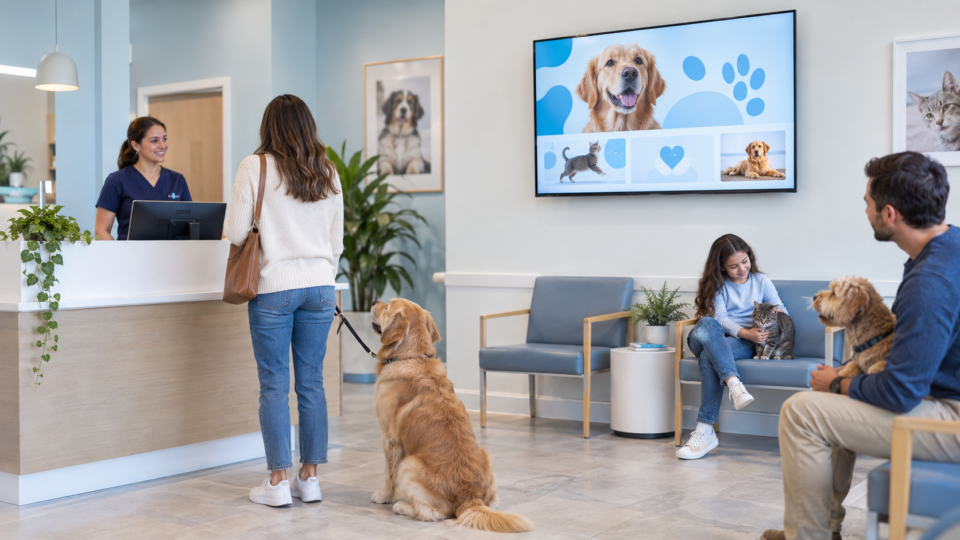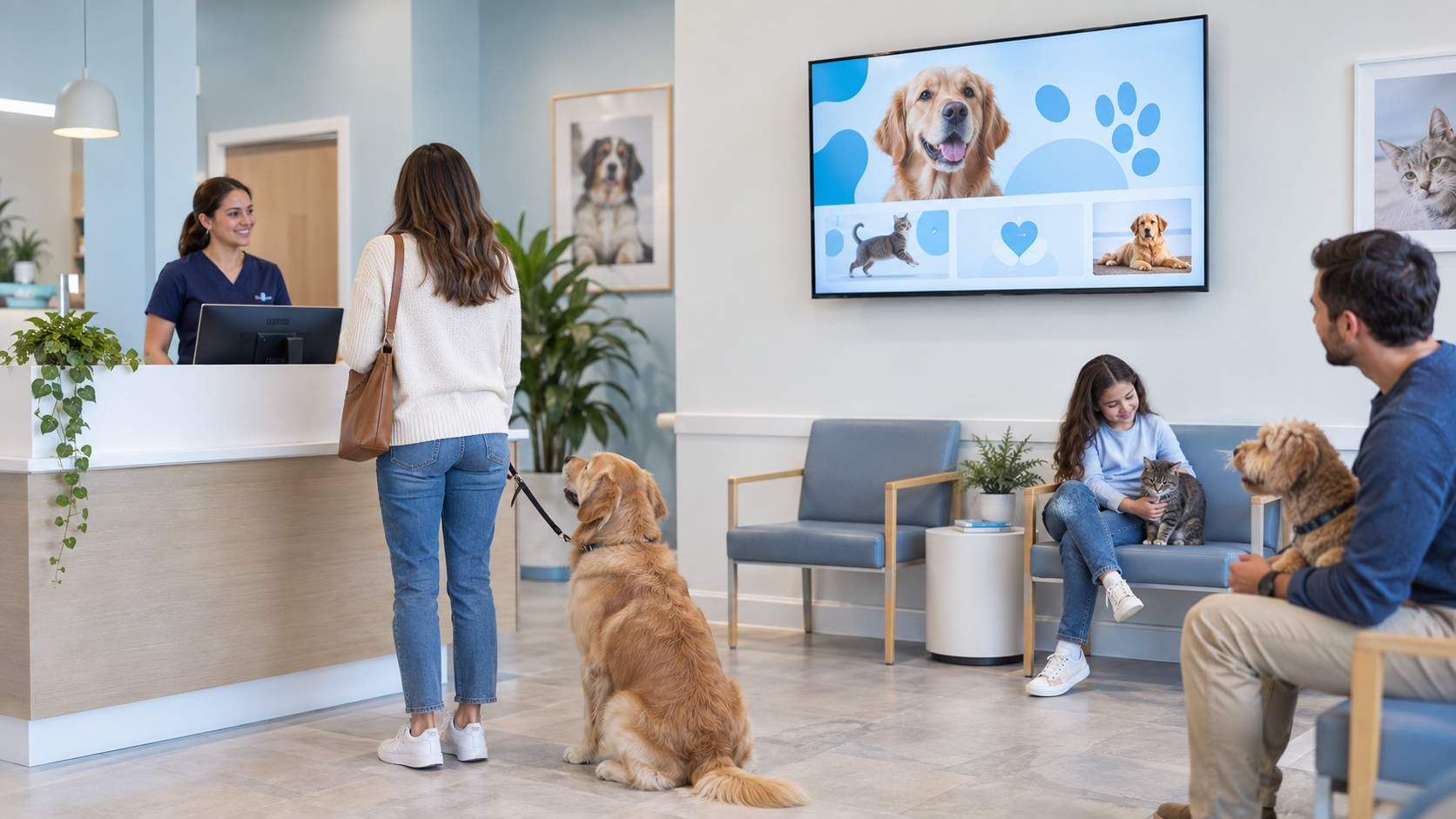
Veterinary preventive-care messages belong in the lobby when they help owners prepare for a conversation with the care team. They should be calm, reviewed by the practice, and never presented as a diagnosis or a universal plan for every pet.
Make prevention easier to discuss
Owners may not know which changes are useful to mention or when a routine visit is a good time to ask a question. A screen can give them language to start that conversation without asking the lobby TV to replace professional advice.
Preventive-care messages to rotate
Life-stage check-in
“Has your pet’s routine changed?” is a simple prompt for an owner of a puppy, adult pet, or senior pet. It is useful because it encourages observation, not self-diagnosis.
Travel and boarding questions
If seasonal travel or boarding is common in your area, remind owners to plan ahead and ask the practice what information they need. Avoid specific requirements unless your team keeps them current.
Nutrition conversation prompt
Invite owners to bring up eating habits, weight changes, or feeding questions. Let the veterinarian or technician tailor the discussion.
Dental-health observation prompt
Use general language about changes an owner may notice and encourage a conversation rather than showing alarming procedure content.
Parasite-prevention question
If your practice discusses prevention, phrase the screen around lifestyle and local questions: “Ask what prevention conversation fits your pet.”
Senior-pet comfort and mobility observations
Invite owners to mention changes in movement, daily routine, or behavior. This can help them bring useful context to a visit.
Contact-information check
Remind owners to ask whether their phone and email are current. This is a simple preventive message that does not make a medical claim.
Keep the message practice-approved
Health-related content should come from your veterinary team and be reviewed when guidance or services change. Use plain language, one idea per screen, and a clear invitation to ask the team when the answer depends on the pet.
For broader lobby ideas, see Waiting Room TV Ideas for Veterinary Clinics. For service education, read How a Veterinary Practice Can Use Screens to Explain Services.
Keep useful messages in rotation
Pair and Play helps practices schedule and update customer-facing screens as seasons, services, and customer questions change.
Start at $0 today with two included screens. See setup options.