Med spa consultation digital signage can introduce a useful conversation without promising a result. Focus the screen on what a person can ask, how the consultation process works, and where to arrange the next step.
The message should help someone become better informed. It should not decide that a treatment is suitable for them, imply that everyone will achieve the same appearance, or use a polished image as proof of a result.
Promote the consultation’s real purpose
Ask the practice’s clinical lead to confirm what happens during the consultation and who provides it. Depending on the practice and service, the discussion may cover the person’s goals, relevant history, available options, suitability, risks, costs, or whether another next step is appropriate. Describe only the process your practice actually follows.
A screen does not need to fit that whole conversation into a few lines. Its job can be to invite a question and make the booking process clear. The appropriate professional handles the individual assessment.
Three consultation invitations for different moments
These fictional copy directions are starting points for review by your practice. Check the service, process, wording, and applicable advertising requirements before using a version.
1. Introduce an option someone may be curious about
CURIOUS ABOUT YOUR OPTIONS?
Ask about a consultation.
Use this for a visitor who has noticed the practice but is unsure where to begin. Pair the invitation with a calm, relevant image of the actual reception or an authorized team photo. You do not need a transformed face or body to explain that a conversation is available.
If the design names a particular service, the clinical reviewer should confirm the wording and context. Keep a service name separate from a claim that it will deliver a specific result for the viewer.
2. Explain the process before someone books
WHAT HAPPENS AT A CONSULTATION?
Ask our team about the process.
This direction answers uncertainty about the appointment itself. A second approved screen could briefly explain practical steps such as discussing questions and reviewing next steps, if those accurately describe your service.
Front-desk staff should know which administrative details they can explain and when to refer a clinical question to the appropriate professional. Confirm the fee, appointment format, cancellation terms, and booking route before mentioning them. Do not call the consultation free unless that is an accurate, approved offer.
3. Give returning visitors a clear follow-up route
QUESTIONS ABOUT YOUR NEXT STEP?
Ask how to arrange a follow-up consultation.
This helps an existing visitor understand how to continue a conversation without assuming that another treatment is needed. Use it only if the practice provides that follow-up route and staff can explain it.
Avoid attaching a countdown, mandatory package, or outcome promise to the invitation. The relevant professional can discuss whether any next step is appropriate for the person’s circumstances.
Verify the people and credentials you show
If you introduce a provider, confirm their current name, professional title, role, and credentials before putting them on a screen. Check license details with the relevant licensing body and any certification with the organization that issued it. Keep a review record and update the screen when a role or status changes.
Be precise about a credential. Do not add an unsupported specialist title, imply a certification applies to a different field, or let an AI-generated badge stand in for verification. Use an authorized current photo rather than a generated person presented as a real member of the team.
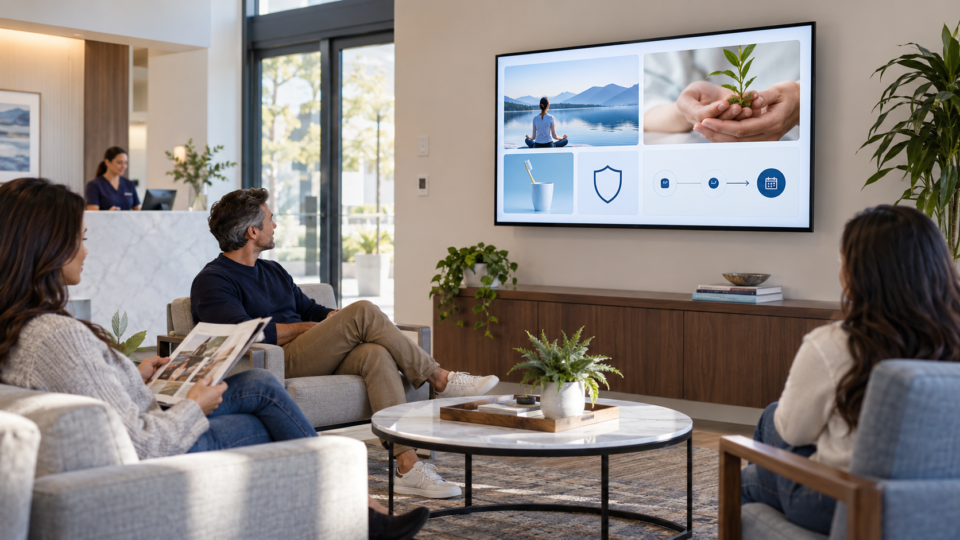
The featured image on this article is a fictional editorial illustration. It is not a provider introduction, a customer example, or evidence of a qualification.
Review the impression created by words and images together
The FTC’s health-products advertising guidance explains that claims can be expressed directly or implied by the overall presentation, including images. Treat that as a reason to review the whole screen, rather than checking the headline alone. Have the appropriate reviewer confirm the requirements for your practice and jurisdiction.
A consultation headline beside an exaggerated transformation image can still imply a result. A small disclaimer should not be used to rescue a misleading main message. Use straightforward process imagery and accurate wording from the start.
Do not create synthetic before-and-after evidence. If the practice uses real treatment imagery, it needs the appropriate consent, context, substantiation, and professional review for that particular use. A general consultation invitation can often be communicated without it.
A short approval check before display
- Purpose: Does the screen invite a discussion rather than tell the viewer that a treatment is right for them?
- Facts: Are service names, provider details, fees, dates, and booking instructions current?
- Claims: Has the clinical and advertising reviewer checked both explicit wording and implied outcomes?
- Imagery: Is each image authorized, representative, and clearly distinguished from an illustration?
- Action: Does the next step lead to the real practice process, with someone available to help?
- Presentation: Can the message and any necessary qualification be read from normal seating without audio?
Create from approved wording, then check the room
Pair and Play’s Screen Maker can start with a description, photo, logo, or exact wording; each is optional. For this use, approved wording gives the design a clear factual boundary. Check the result for added benefits, altered provider details, or imagery that changes the message.
Confirm the business and active playlist before using Approve and add to playlist, then inspect the actual display. The Screen Maker guide explains that sequence. For a broader content mix, see med spa TV screen ideas.
Try one reviewed consultation invitation during your 14-Day Screen Test. Ask whether it helps visitors understand the process and raise an informed question, without treating those observations as proof of a treatment or sales outcome.